Leaking water heater
Burst pipe, leak or flooding? Call and we'll connect you with a local water damage pro.
Call (772) 555-0101Main Street Water Damage is a free referral service. We connect you with independent local service providers. We don't do the work ourselves.
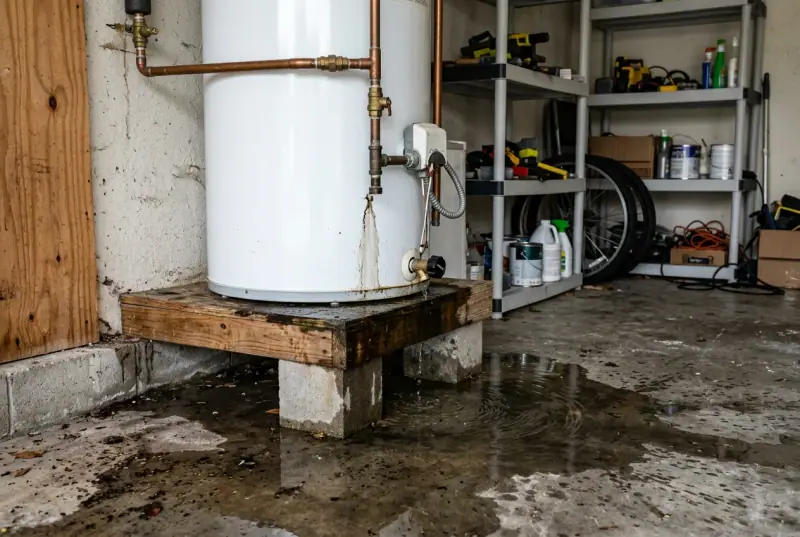
A leaking water heater may show up as a puddle around the base, drips from the pipes on top, or water from the pipe on the side. The water can be hot, and the heater runs on power or gas, so go slowly.
What to do now
- Turn off the power. For an electric heater, switch off its breaker. For a gas heater, turn off the gas supply. Don't walk through standing water to reach a panel or an outlet.
- Shut off the cold water to the heater at the valve on the pipe feeding it. If that valve won't turn, close the main water valve.
- Stay clear of hot water. Don't touch the relief valve or the pipe attached to it.
- Never cap or plug the relief valve. It is a safety device.
- Smell gas? Leave the house and call your gas company or 911 from outside.
- Move belongings off the floor and take photos for your insurer.
- Call for help to remove the water. The EPA advises drying water-damaged areas and items within 24 to 48 hours to prevent mold.
Why it happens
Tank water heaters wear out. Minerals in the water slowly eat at the steel tank, and the anode rod that protects it gets used up. Green Building Advisor reports an average life of nine to twelve years for tank-type heaters, though the common belief is 10 to 15.
Leaks also come from loose fittings and from the relief valve opening. Lennox says the valve opens when tank pressure reaches 150 psi or the water reaches 210°F. A thermostat set too high or faulty can cause that. Lennox recommends 120°F or lower. The International Code Council notes that any discharge from the relief valve points to a problem with the water system, the heater or the valve itself.
What happens next
A plumber finds where the water is coming from. A loose fitting or a worn valve may be fixed. Water coming from the tank itself usually means the heater needs to be replaced, and a plumber can confirm that.
A water damage provider does a different job. They remove the water, measure moisture in floors and walls, and dry them. Drywall and flooring near the heater soak up water, so drying matters even after the leak stops.
What happens when you call
- You call the number on this page. A short automated assistant asks two or three questions, such as what's wrong and your ZIP code, so we can find the right provider.
- We connect your call to an independent water damage provider who serves your area.
- You talk with the provider directly about the problem, timing and price before any work starts.
Main Street Water Damage doesn't charge you for the referral. The provider sets their own prices and does the work. Calls are recorded for quality and billing.